
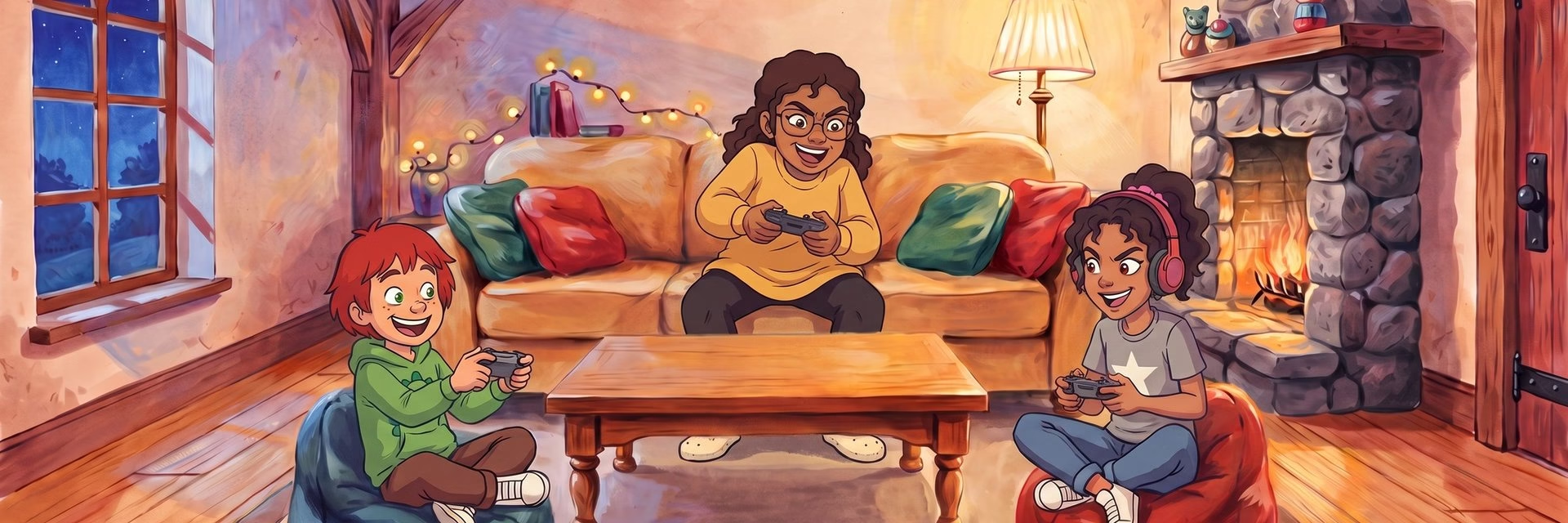

Game hosting has always been sold to the person who plays. Slots, tick rate, mod support, a control panel full of switches that assume you know what a server property is. All useful, and all aimed squarely at the enthusiast in the house. 🎲
Nobody has ever sold anything to the parent.
So that is what we built. ElfHosted now has a Gaming shelf and a Tabletop shelf, and the thing that makes them different is not the hardware. It is a panel designed for the person who pays for it, and who would quite like everyone off the computer by nine.
What a parent actually wants to know
Ask a parent what they need from a game server and you get four questions, in this order.
1️⃣ Is my child on it right now?
2️⃣ How long have they played today?
3️⃣ When does it shut?
4️⃣ Who is allowed in?
Every ElfHosted game server answers those four, on one page, on a phone, in about ten seconds.
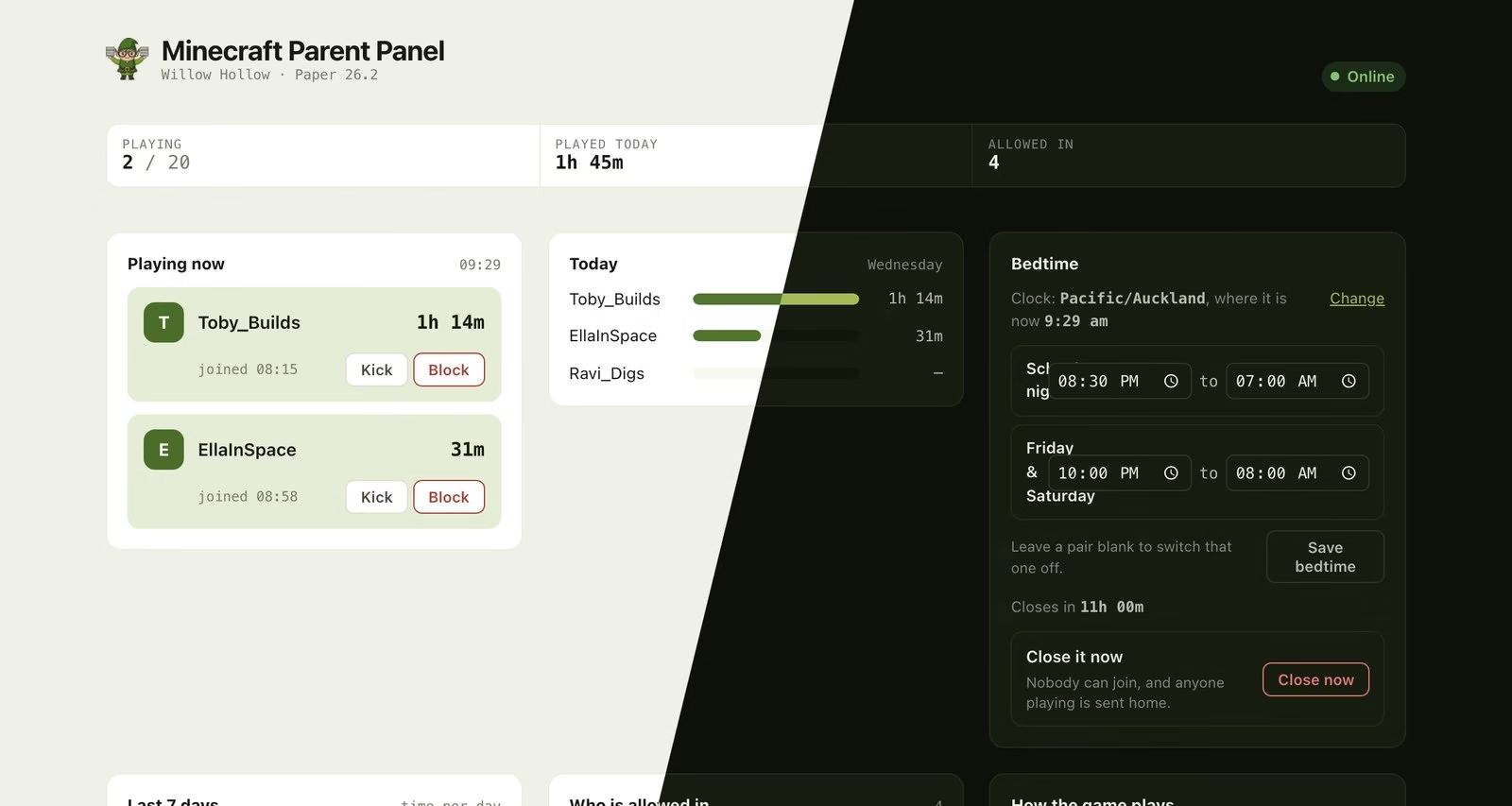
That is the whole panel, in both themes because it follows whatever your phone is set to. Notice what is at the top: not uptime, not CPU graphs, not a console. Two players, the time each has played today, and a bedtime counting down.
Bedtime that is not an argument 🥱
The feature we are most pleased with is the one that means you stop being the timer. Set the hours the world is closed, with different hours for school nights and for Friday and Saturday. Anyone still playing gets a warning in the game ten minutes before, and another at one minute. Then the server closes.
The world and everyone's builds are exactly as they were. Nothing is deleted, nothing is lost, and the thing that says no is a schedule rather than you.
If tonight is special, open it for one night. Tomorrow's bedtime still happens, so one late pass does not quietly switch the whole thing off.
An allowance, not a stopwatch ⏳
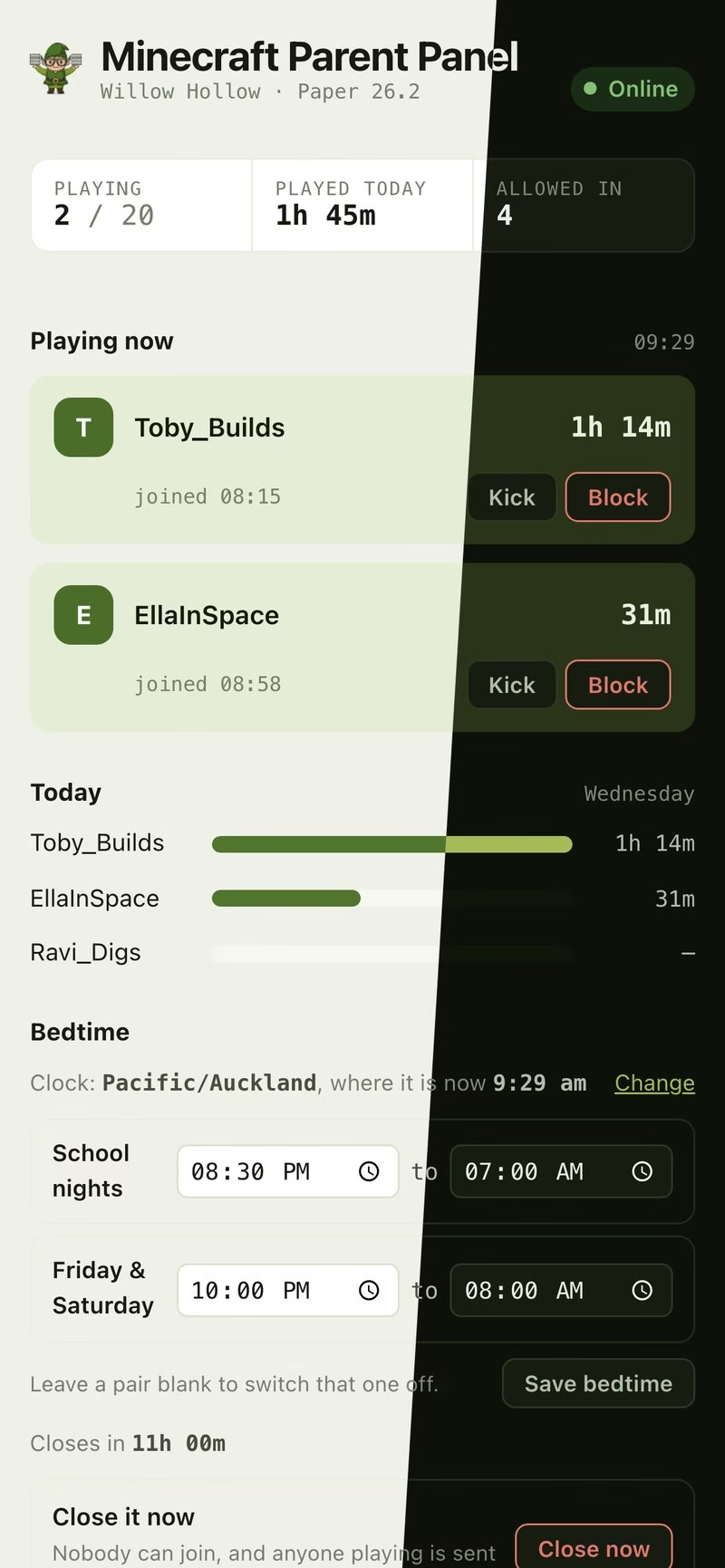
Bedtime handles when the world closes. It does nothing about the Saturday that becomes six hours before anyone notices, so each player now gets a daily allowance too.
Set a number of minutes per child, with a different number for weekends, because weekends usually are different. The server keeps count. Five minutes before the allowance runs out they get the same friendly in-game warning bedtime gives, and then they're wound down. Their world and their builds are untouched, exactly as with bedtime.
If today has earned more, add bonus time to one child without touching anyone else's. It expires at midnight, so one generous afternoon doesn't become the new baseline.
Bedtime still outranks the allowance. If the world is shut, it's shut, whether or not there are minutes left on the clock.
One honest caveat, in the spirit of the section further down: this is a nudge, not a lock. A determined child could rename themselves and start a fresh allowance, and we would rather say so than pretend otherwise. It is built for a household that broadly agrees with the rule, which is most of them.
A glance at your lock screen 📲
Add ElfHosted to your phone's home screen and a push notification arrives the moment somebody joins or leaves the server. No app to install and nothing to configure.
It is a small thing that changes the shape of an evening. You know your daughter is on before you have opened anything, and you know she logged off without going to look. If you would rather the alerts also went to a family Discord, a Telegram, or the other parent's email, they can.
What it deliberately does not do
It does not read chat. It does not record what your children say, or to whom, or show you their messages. It cannot tell you what they built or who they built it with.
That is a design decision rather than a missing feature. The panel is a way to run a household rule you already have, not a way to watch over a child's shoulder. If you want surveillance, we are the wrong shop.
Three games, and what separates them
Terraria has been on the shelves for a while and is the gentlest of the three to run. One shared password, an invitation block you can copy straight into a message to another parent, and a world that survives everything.
Minecraft is the one that puts the whole household in a single world. The iPad, the Switch, the Xbox and the PC all play together, and nobody has to buy the game twice. It runs Paper, takes the whole Bukkit and Spigot plugin ecosystem, and admits people by list rather than by password. That list is the part worth understanding: a child on a tablet is a different account from the same child on a PC, and the panel sorts that out for you. Type the name however they write it, and it works out which kind it is.
Palworld is the one where having a server matters most. Left alone, a Palworld world lives on whoever started it, so it disappears the moment that PC sleeps and everyone waits for one person to come online. Ours stays up at a fixed address their friends save once, with every base exactly where it was left.
And the tabletop shelf
The same instinct, pointed at the dining table rather than the screen.
- Foundry VTT is the virtual tabletop your group probably already wants, running at a fixed address so nobody has to be the host. Bring your own licence, point it at your world, and the session starts when people arrive rather than when the host's laptop wakes up.
- Grimoire is the reference shelf that goes beside it. Point it at the PDFs you already own and it becomes a library you can actually search, from your phone, at the table, mid-combat.
- Dungeon Revealer is the light one: a battle map with a fog of war you wipe away as the party explores. No character sheets, no rules engine, no setup. Plenty of tables run it alongside Foundry for the nights when getting started matters more than features.
Foundry in particular is the clearest case for hosted: a virtual tabletop is only useful when it is up, and it is never up on the night the host has a cold.
What it costs
US$9/month, each, with the same terms and discounts as everything else here. Monthly, cancel whenever, and the storage and backups you already have apply to the worlds too.
There is no separate tier for the parental controls, because charging extra for the bedtime would be a strange thing to do to a parent.
Have a look
Browse the Gaming and Tabletop shelves, or read the Terraria documentation to see exactly what the panel does before you spend anything.
Built by parents who run one at home, which is genuinely why bedtime exists at all.